Modern Anxieties Series: Back to the Future

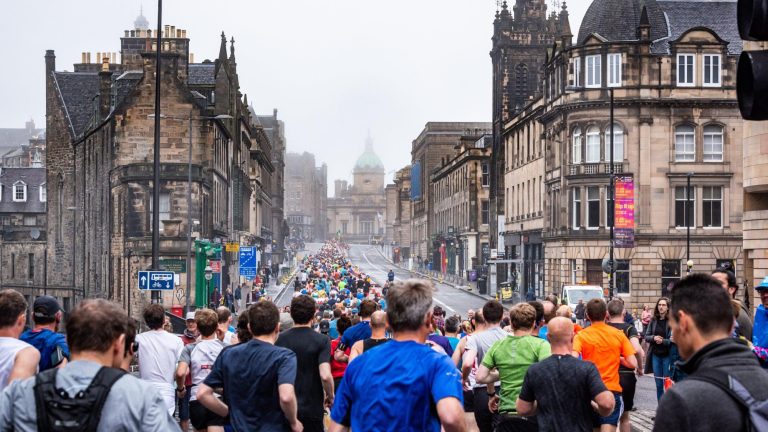
Image by Sam Teigen

We are on a journey.

From our very first words, we are compared to those around us, our every achievement judged, and we are quickly placed within a structure that defines both success and normality.

As we go through childhood, we are measured, prodded, and tested. Before we even reach double figures, we are asked what we want to be when we grow up, and as we develop we are encouraged to become more competitive and goal orientated.

At 18, my blueprint was: university, career, mortgage, marriage, kids, promotion, retirement. Anything that strayed from this path seemed to be at worst, a failure, at best – a risk. If you lag behind then an overwhelming sense of urgency can take over, which pushes you to work harder.

But what if you do work harder and climb to the top, and then find that you don’t care much for the view? What if you do achieve your goals, and you’re still not happy?
In my youth I just wanted to fit in, but looking back it seems daft that I spent much of my time doing things that were expected of someone my age, but not things that I actually wanted to do.

I am now 33. As a reaction to my peers reaching their milestones, I started to reassess my life. But I mainly concentrated on my weaknesses in comparison to their strengths. I never once stopped to think of my achievements, nor did I think about their failures, or if they are even happy. Very self critical, and based more on an emotive response than any logic.

The midlife crisis is arguably a cultural construct; there is little evidence of it in Japanese and Indian cultures, where the elderly are revered and respected. Western society is geared toward the young, the elderly are viewed as spent or useless. It’s no wonder then that we panic that our youth is slipping away, and that we must cram in as much as possible.

Is this approach so unhealthy?  Wanting to better ourselves is commendable. However, if keeping up becomes our motivation then we can lose sight of what we want. We concentrate on the things we are no longer able to do, rather than looking to the future.

There is a nagging doubt that my life could have been different, and that I’m running out of time. I have a list of things I want to do before I die, but this is not my list; I have no desire to swim with dolphins. We fall out of age brackets, and opportunities fade with the passing of each year. The idea of settling down feels increasingly stifling, and as I get older, the images that seem to point to success and fulfilment feature younger and fitter men than myself.

I look at people older than myself, and I think about my own mortality. I look at the young and wonder if I had that much fun when I was their age (I probably did). I probably need a reality check, I probably need to stop moaning. But most importantly of all, we should probably all just start enjoying ourselves a little more. Because you know, when we’re really old, all of this will just seem so flippin’ trivial.

Related issues:

DISCLAIMER: The views expressed in this article or in the comments below, are not those held by CALM or its Trustees unless stated, and liability cannot be accepted for such comments. We encourage friendly and constructive debate, but please don't share personal contact details when commenting and exercise caution when considering any advice offered by others. We don’t allow abusive, offensive or inappropriate comments or comments that could be interpreted as libellous, defamatory or commercial and we will remove these without warning as and when we find them.

5 Responses to

Modern Anxieties Series: Back to the Future

  1. This column is very poignant as I’ve heard and seen stories of people my age, even some I went to school with, living lives that have led them to situations I would dread, such as joining the Army and going to Afghanistan, or even prison for stupid crimes they didn’t need to commit. I often sit and wonder whether anybody made it and, if they did, whether they’re keeping it quiet or our paths haven’t crossed yet.

    Not that I’ve made it, but I have done twenty times more with my life than I ever thought possible and I seem to advertise my exploits all the time on social media sites. Some is through luck, such as meeting my wife, some is through the positivity and ideas of others, such as other writers, while some is through having no money and trying to do something to survive. People don’t seem to mind hearing my exploits so I continue advertising my work and hoping the message is getting out to new sources.

    Tomorrow I will write some more of the novel that I’m close to completing, an impossible dream. But only since 2005.

    Terry Lander 15th August 2011 at 9:16 pm
  2. Mark, this piece spoke to me. I too am 33 I’ve been broke for the past 3 months and I am not even close to checking any of those milestone boxes you list above. In my life the opportunity to do so was there many times – do a PhD / save for a deposit on a house / decide on a promising career / settle down … but I always let it pass me by because of a new adventure that presented itself.

    There are times when I see this as a complete negative and its usually as a result of comparing myself to the majority of my peers, my life-long friends. As you put it: “There is a nagging doubt that my life could have been different, and that I’m running out of time.”

    The solution found me … and that is to hang out with younger people. As we both know deep down inside, we are not running out of time — or at least — we’re not the keeper of our own time. My time could be up any second and if it were my thoughts would not be centred around the mortgage I never had.

    Nevertheless despite this logic I still feel left behind by mates at times and in these times I choose to keep the company of quotes. Here are a couple that never fail to bring me strength:

    “Two roads diverge in the wood, I took the one less travelled. And it has made all the difference”

    “The credit belongs to those who are actually in the arena, who strive valiantly; who know great enthusiasm, the great devotion, and spend themselves in a worthy cause; who at best know the triumph of high achievement; and who, at worst, if they fail, fail while daring so greatly, so that their place shall never be with those cold timid souls who know neither victory or defeat.”

    Libby Ellen 17th August 2011 at 10:27 am
  3. Without wanting to sound like a character out of some American Bromance film, I feel you man! I hope you enjoying yourself now and find your calling in life.

    usuallyjustatshirt 17th August 2011 at 4:28 pm
  4. Hello, thankyou very much for writing this – it brings into focus and says better a lot of things I think we think.

    its really quite odd and insane how the age thing works, and as a 26year old male I know Im shoudlnt be affected by it – yet – and yet the lines “oppertunity fading with each passing year” and “feature younger and fitter men” hit hard because even to me they are relatable.

    Thankyou for writing this and for this website.

    Michael W 23rd August 2011 at 9:23 pm
  5. Very thought-provoking post. I’d like to give a few thoughts as I’ve enjoyed reading your perspective and those of the others who’ve commented.

    I went to university because I didn’t know what else to do at the time. I had an opportunity to go so I did. They were not the best years of my life by a long shot, although six months that I spent in Germany as part of the course stand out as a big bright spot. I’m still in touch with people from that time in Germany but I’ve lost touch with everybody else from my time at my UK university.

    When I finished university in 1996 I did not want to go straight into a graduate training scheme type job. It used to get up my nose, the whole university careers department pressure, e.g. “You may be doing your final exams, but it’s vital that you keep track of the big corporations’ milk-round schedule”. As you noted, Mark: “At 18, my blueprint was: university, career, mortgage, marriage, kids, promotion, retirement”. How I saw it in my final year of university was like a series of conveyor belts: the various schools — plop off the end — into sixth form — plop — university — work — retirement — death. Not very appealing were these conveyor belts. When I finished university I went to London (because that’s where most of my friends had ended up) and I started temping (because I wanted a “normal day-to-day life” in England after having done four years of studying). I never did get a “proper job”, that is, I’ve never had a full-time job, or even applied for one. I’ve forever temped and freelanced.

    I do suspect though that the couple of years that straddle the 30th birthday is a time when people do take stock, and, in particular, compare superficial notes and assumptions about the success of lives of their peers. I suffered a bad depression at the time of the 1999 eclipse when I was 27. There was a feeling of crushing pointlessness about the work that I was doing (working for management consultancies) and therefore my life. I went to Munich by myself to see the eclipse, saw it, felt utterly alone, and then made a 90 minute journey to the town where I’d studied in Germany to meet up with a woman who’d been in one of my classes. I met her in the lovely setting of a summer’s evening in a Bavarian beer garden by a river, but I was struggling to say anything of interest. I felt I had nothing remotely interesting to say to her about my life. She meanwhile was organising a film festival and doing this and that interesting-sounding stuff. After not all that many minutes though (and I don’t know how the conversation turned), she revealed to me that earlier that week, she’d been at the lowest and darkest point of her entire life so far. I ended up missing my last train back to Munich and we stayed up all night wandering around the town in intense and ever-lightening conversation. And the pen-friendship that began then and lasted for years after was a massive lifeline for both of us.

    Around this time, I was feeling very isolated in London. I’d gone out to the Zone 6 suburbs to see a friend I’d grown up with, and told him I’d joined a London-based hiking group who went out on day trips from London to do walks in the country, and presumably talk and socialise while at it. The long-term friend’s response was “You’re desperate”. I thought, “Well, bloody hell, yes, I am desperate”. But he didn’t provide anything else beyond that remark. Back then for a time I used to perceive a certain swaggering mild arrogance about him — mainly to do with finances and his taste for the “finer things” in life — fancy gadgets, fast cars and expensive, high-end booze and the like.

    I left London four years ago and I’m 40 next birthday. I remember feeling very glum for about six weeks when I turned 30 but turning 40 seems like neither here nor there. One big difference I feel in this new town where I live is that people aren’t interested in what work you do (or not). Or, should I say, they’re interested to a small degree out of interest, but seem a lot more interested in who you are as a person and in your character. Also age isn’t as much of an issue — I have friends here from their 20s to their 70s.

    I wonder whether the fact that people don’t seem to judge each other re. work or perceived “success” is because this isn’t London, or because I’m slightly older than I was and no longer feel any [self-imposed?] pressure to measure up to my peers. I really don’t know!

    The friend who made the “desperate” remark those years ago now lives half an hour away and I still see him quite often. We were in the same form class at school (which was at the other end of the country) from age 11 and our lives now are very different. He has three children; I have none. He has a sprawling four-bedroom house in the country with half an acre (with four toilets); I live in a rented one-bedroomed flat. He and his wife have three cars; I haven’t got one. But these differences are totally superficial and completely irrelevant. There’s still this mutual respect and genuine interest in (and desire to still be part of) each other’s lives.

    As for work, I need to do it to get money to pay my rent and buy food and beer. But my liberation came when I made the separation in that what I do to earn money is not how I define myself or what I look to to find meaning in my life! I used to detest the question, “So, what do you do?”. I used to give sarcastic replies sometimes (“Eat, breathe; at night I usually sleep …”) but soon stopped that. But still — it’s a crap question! Liberation also came when I accepted and freely (and now almost joyfully) acknowledged that my work is essentially pointless. People react with looks of surprise (though seldom words) when I tell them as much, and with a light-hearted disposition: “Yes, my work is pointless, but I’m not all that interested in work anyway. I like having lots of free time to fritter at will”.

    Most jobs ARE totally pointless (particularly office-based ones). There’s even a website that goes into amusing detail about this (http://www.anxietyculture.com/crapjobs.htm). But I think there’s a lot to be said for recognising that fact, accepting it, coming to terms with it, and then shifting a healthy chunk of the focus that is placed on the importance of work and career onto other, more important and perhaps neglected aspects of life!

    John Dee 28th August 2011 at 12:29 am

Leave a Reply

Your email address will not be published.

*Please, nothing defamatory or obscene